In between World War I and World War II there was a group of successful architects that came over to America. By these architects coming over to America it allowed them to express themselves by doing what they loved. Architects such as Irving Gill, Frank Lloyd Wright, Rudolph Schindler, Richard Neurta, William Lescaze, Philp Johnson, Mies Van Der Rhoe and many others influenced Modernism in America, the use of glass and natural elements characterized Modernism in America. We see the use of bring natural elements into many structures, they did this a lot of times by using there surroundings as inspiration.
Philp Johnson, Glass Water
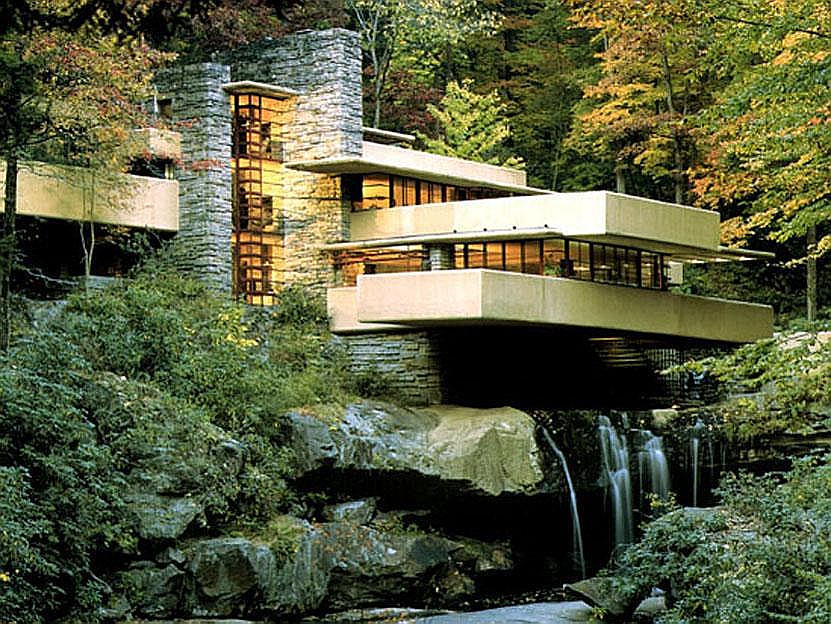
Frank Lloyd Wright, Falling Waters
As Modernism continued throughout America we see many "veterans" become educators and mentors to up and coming architects.
Current Applications:
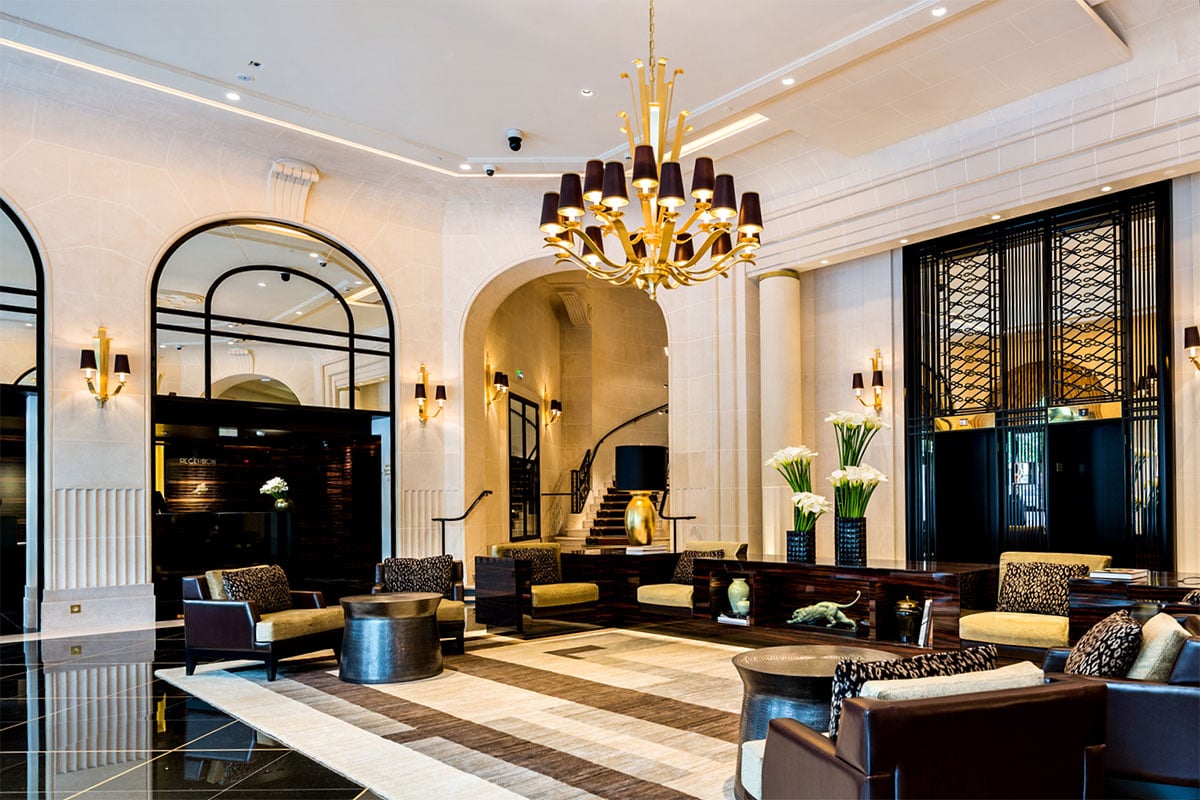
These interiors and exteriors reminded me of the continued Modernism period in America for its use of glass and just using its environment to create these spaces to be within its surrounding.
The continued Modernism in America was a period I really enjoyed for its use of just simple yet very complexed designs.
Peer Discussion
I really enjoyed reading Flors Blog because she really gave great discussion of Modernism in America. Flors video in her blog was also very interested and I leaned more about the Glass House from watching it.
Another Blog I really enjoyed was Sammy for her content in her Blog she really went through this period and explained in much detail the numerous individuals that played a part in this movement.
In between World War I and World War II, Art Deco was a style of design that began in France. Art Deco was a fashion oriented style, it included skyscraper furniture, geometric patterns and the use of reflected material. Since this style of design was inspired by the Art Nouveau period it was often looked at very differently. An architect from the Art Deco period, Michel Roux-Spitz included many elements in his work that influenced the Art Deco movement. Art Deco design also can be characterized by its use of rich materials (ebony, zebrawood, tortoise-shell, leather, polished metals, mirrors, and glass). Many figures from the Art Nouveau Movement began to incorporate Art Deco style within their work. We see this with Jean Dunand who was a figure in the Art Nouveau Movement, he moved toward this new style of design and began to use geometric forms. We also see this transition with Maurice Dufrene who was also a figure in the Art Nouveau movement, he designed furniture, textiles, glass work, metal work, and complete interiors.
Throughout time Art Deco design moved more towards modern art. This can be contributed to Jean-Michel Frank. Another influential individual from Art Deco was Eileen Gray, she had a long career in France. She designed furniture that was highly original, ingenious, and had cubist characteristics. During the Art Deco style of design there was many influential individuals and many places adopted this style of design.
During the Art Deco style of design a study on how humans interact with devices and environments, started the Industrial Design. Industrial Design blended Art Deco characteristics with streamline design. Industrial Design focused on products for industry. Art Deco then moved into residential design we see this in kitchens and bathrooms.
I really like the Art Deco style and it was very enjoyable and exciting to be able to incorporate this style in an actually project in Human Factors last semester!
Current Applications!
Peer Discussion!
I read Emily and Allison Blog. In Emilys' blog, I loved the connection she made with Art Nouveau especially with the video she posted. Her video was very informative and connected well with the discussion. I also read Allisons' blog and loved her images of her current applications especially the one of the bathroom.
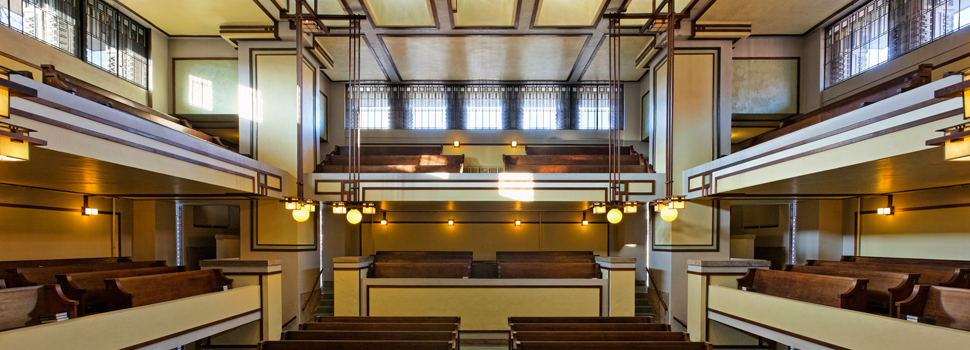
The Emergence of Modernism was a period of new direction of design. This movement was thought of as the originators of the "modern movement". There were four main architects Walter Gropius, Ludwig Mies van der Rohe, Le Corbusier, and Frank Lloyd Wright. One of the most influential architects, Frank Lloyd Wright designed over 1000 structures and completed 532 works. Many of Wrights work is located in Illinois. I am looking forward to being able to look at his in upcoming weeks.
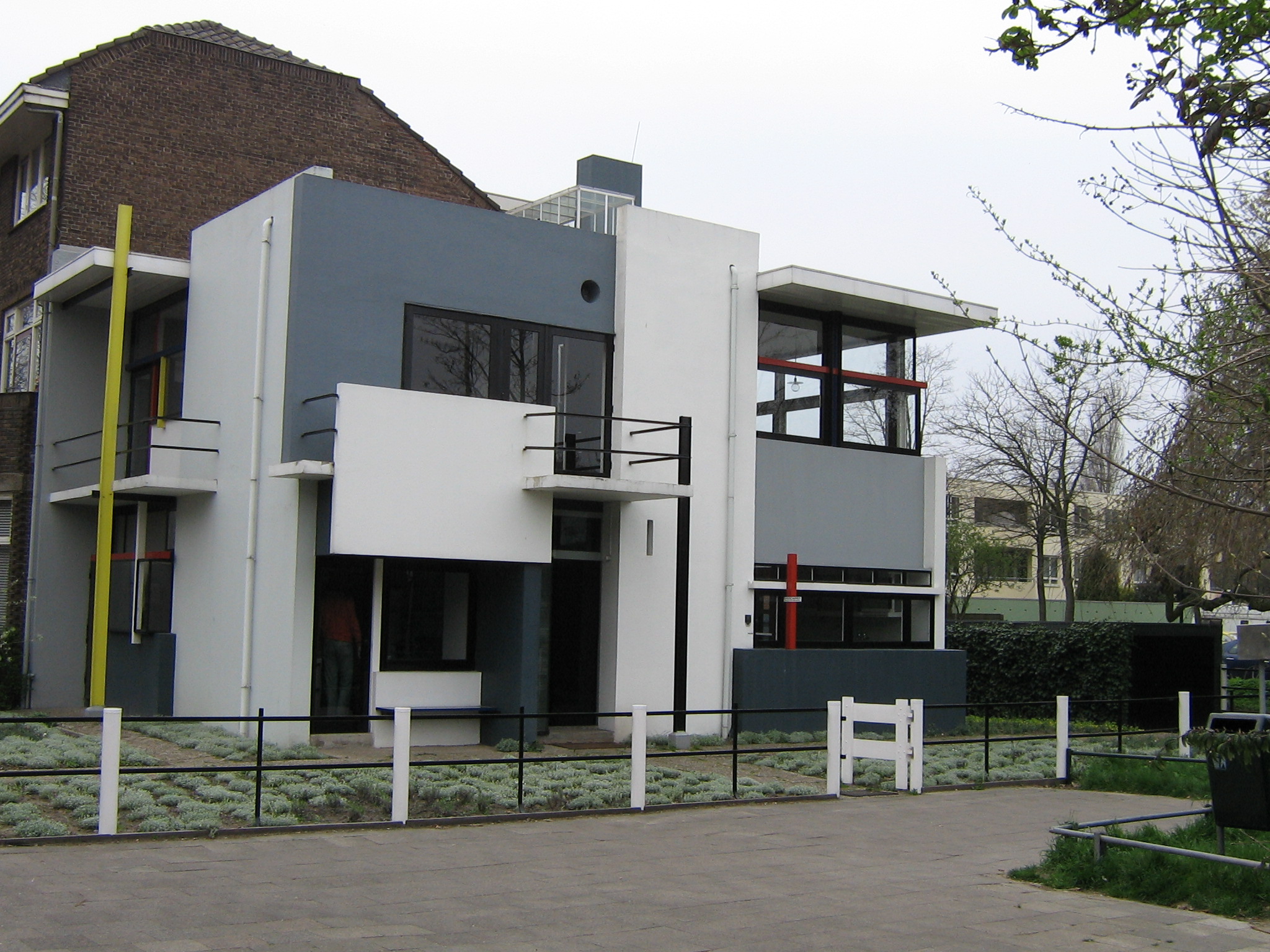
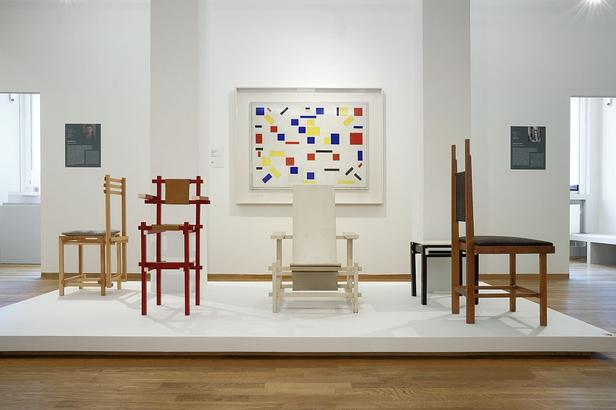
Meaning "The Style" the De Stijl period included dutch artist, sculptors, architects and designers. The De Stijl period was from 1917-1927. De Stijl tired to express a new utopian ideal of spiritual harmony and order. This period was also about abstraction, simplifying visual work, and the use of vertical and horizontal directions. Throughout this period Gerrit Rietveld created multiple buildings and furniture.
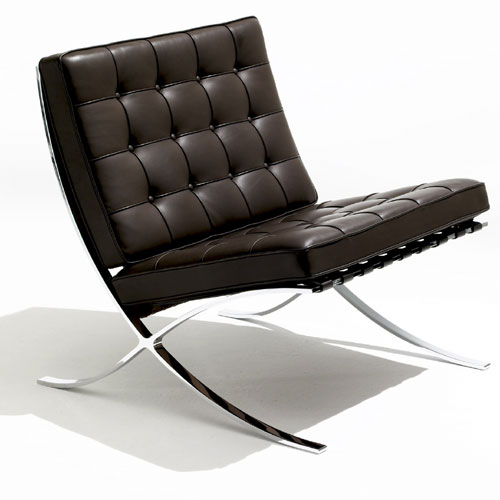
A major architectural style that emerged in the 1920s and 1930s was described as the International style. The International style period included the same architects form the Emergence of Modernism period. Characteristics of the International style includes a radical simplification of a form, rejection of ornament, and use of materials such as glass, steel, and concrete. The philosophy behind the International style was about the honest expression of structure.
Current Applications:
Peer Discussion!
I read Sammy V and Flors Blog. I really like Flor's current application images because you can clearly tell how it relates to the emergence of modernism. I also really like Sammy's Blog because of the way she explained and described this period.
A protest against artistic establishments, the Deutscher Werkbund Movement began in 1892 in Munich, Germany by Herman Muthesus. It continues on to Vienna, Austria in 1898 and then to Berlin, Germany in 1899. The German Workshop which is the translation for The Deutscher Werkbund movement is considered to be equivalent to the Arts and Crafts Movement. It does differ in many ways from the Arts and Crafts Movement, such as instead of going against the use of machine, the Deutscher Werkbund movement embraced it. This movement included a professional design with product manufactures to help Germany keep up in the design world. The overall characteristics of the Deutscher Werbund were clean, simple, with the use of curvilinear lines. The Deutscher Werkbund Movement eventually led to the International style and Art Deco style.
In 1903 Hoffmann established the Vienna workshop (Vienna Secession). To secede means to leave. Which made me think of the Vienna Session leaving towards something new. Which is exactly what the Vienna Secession was . The movement was idealistic, where artistic withdrew from academic, and protested against historicism. The Vienna Secession included individuals such as Olbrich, Klimt, Wagner, Loos, Huffmann, and Koloman Moser. The Vienna Secession included the Secession building which was a exhibition building designed by Joseph Olbrich, and included geometric forms and curvilinear artwork. Another influential individual during this time period was Gustav Klimt who was an Austrian symbolist painter. He believed that there should be a union between art and design, he also used gold paint to create a dramatic effect towards a subject. Some other very influential furniture designers =were Otto Wagner, Adolf Loos, Josef Hoffman, and Koloman Moser who all were also apart of the Vienna Secession as well.
Current Applications...
The use of clean lines, curvilinear forms, and even the use of gold throughout the current applications, in my opinion depicted the Deutscher Werkbund Movement.
Peer Discussion...
I really enjoyed how Sammy broke down the background of the Deutscher Werkbund, it was very informational blog. I also viewed Rachael blog, and I really like how she focused on Josef Hoffman's furniture for her current application.
Coming from the meaning new art, the Art Nouveau period was from 1890 until 1910. It began in France and Belgium. The Art Nouveau period was all about thinking ahead, thinking of a new way to design, and rejecting history. During this period Europe was going through a time of peace, prosperity, and growth. The Art Nouveau period can be characterized by its use of organic lines, modern materials such as iron and glass, asymmetrical facade, electric lighting, curvilinear forms, and its use of decorative ornamentation. Victor Horta was an Belgian architect and designer who performed extensive work during the Art Noiveau period. Another influential individual from this period was Henry Van de Velde, he was a significant Belgian practitioner who built his own house and designed the L'Art Nouvea shop.
The use of curve lined work in this image expressed the characterizes of the Art Nouveau period.
The use of iron is seen throughout this interior and was one of the popular materials from this period.
A significant figure in Paris, Hector Guimard was an architect and designer, He is known for creating decorative elements that could be reproduced. I personally liked the role he played in creating the Paris Metro Subway Station signs.
The Art Nouveau period began to grow in different places such as Spain, Germany, Scandinavia, and the US. Antoni Gaudi was significant in Spain for his use of flowing curves and decorative details. I was personally intrigued by Louis H. Sullivan who along with Louis Comfort Tiffany both were significant in the Art Nouveau period in Chicago. Louis H. Sullivan was involved in the rebuilding of Chicago after the huge fire. Louis Comfort Tiffany was the son of the founder of Tiffany jewelry.
Current applications
A replica of an Hector Guimard, Art Nouveau Paris subway sign. This Metra sign was given to Chicago in 2001 by the city of Paris and placed at the Van Buren Street station entrance on Michigan Ave. When I saw the example of the Hector Guimard, Paris Metro sign, I immediately thought of the sign in Chicago that popped up. When I first saw the sign in Chicago, I had no clue of the history behind the sign but after learning about the history of the Art Nouveau period, it was pretty cool to make that connection to a current application.
The use of line work and nature like elements is seen in this current application of Art Nouveau.
Peer Discussion
I really was interested in Allison's pictures of her current applications, especially the one of the bathroom because it was a clear depiction of the Art Nouveau period. I also would like my bathroom today, to have different elements of Art Nouveau because it was a pretty magical period.
I also read Nicole Kopsias blog and found her video very interesting. Her video had great images that showed off the Art Nouveau period well.
Arts and Crafts Movement Peer Discussion Continue!
I also enjoyed Flors' Blog because me and her had similar thoughts as far as the William Morris 1870 wallpaper, Garden Lily. She also included a great connection to the William Morris wallpaper by showing how it was similar to Lilly Pulitzer Pattern in a current application.
Born of ideals and the Reaction against the Victorian Period the Arts and Crafts movement began in the 1860. The Arts and Crafts movement was intended to "renew design by looking at an idealized preindustrial world". The movement began in England and was founded by William Morris. The Arts and Crafts movement can be characterized by its use of simple, hand crafted, heavy oak wood finishes.
Throughout the space heavy oak wood finishes are being used.
The main figure of the Arts and Crafts movement William Morris, was not only a designer but also a writer, reformer, poet, and businessman. Morris formed his own company with Marshall and Faulkner. Their company specialized in stain glass, furniture, and textiles. Although Morris was a very talented designer, an influential piece of furniture the "Morris Chair" was designed by Philip Webb, an employee for Morris and Company. The Morris Chair had a simple construction and used solid wood, and loose cushions.
Philip Webb the designer of the Morris Chair, was an architect and was very concerned with how things were manufactured. Webb eventually formed his own practice and his first project was the Morris's house, Red House in Kent. This house represented the Arts and Crafts movement with its design of "simple, with straightforward emphasis on visible hardware".
Throughout time a second generation of The Arts and Crafts movement formed. Designers such as Voysey, Lutyens, Mackintosh and Stickley inspired many other elements of the Arts and Crafts movement. Charles Francis Annesley Voysey combined Gothic and Japanese details within the movement. We also see Charles Rennie Mackintosh work throughout the movement and later in time. Gustav Stickley inspired the Arts and Crafts movement in the United States.
Current Applications
The Arts and Crafts movement design styles and principles are still seen today.
The use of heavy wood throughout a space is seen today.
A modern take on Mackintosh High Back chair.
Not only do we still high back chairs throughout spaces but High Back couches are also seen in todays interiors.
Peer Discussion.
I read over Megan Y blog and I enjoyed her pictures of current applications because throughout the photos you see the Arts and Crafts Movement with the use of heavy wood and a nature like aspect within the spaces. I also really enjoyed the clip she posted because the clip gave a short yet very entertaining depiction of the Arts and Crafts Movement. This clip related well to the topic and gave entertaining images throughout the video.
Addition links!
https://www.youtube.com/watch?v=tYjNO2Y4m6c
This video gives a great overview of The Arts and Crafts Movement.









.jpg)